Double Jersey Fabric: Complete Guide to Benefits, Uses, Manufacturing & Finding the Best Fabric Suppliers in India

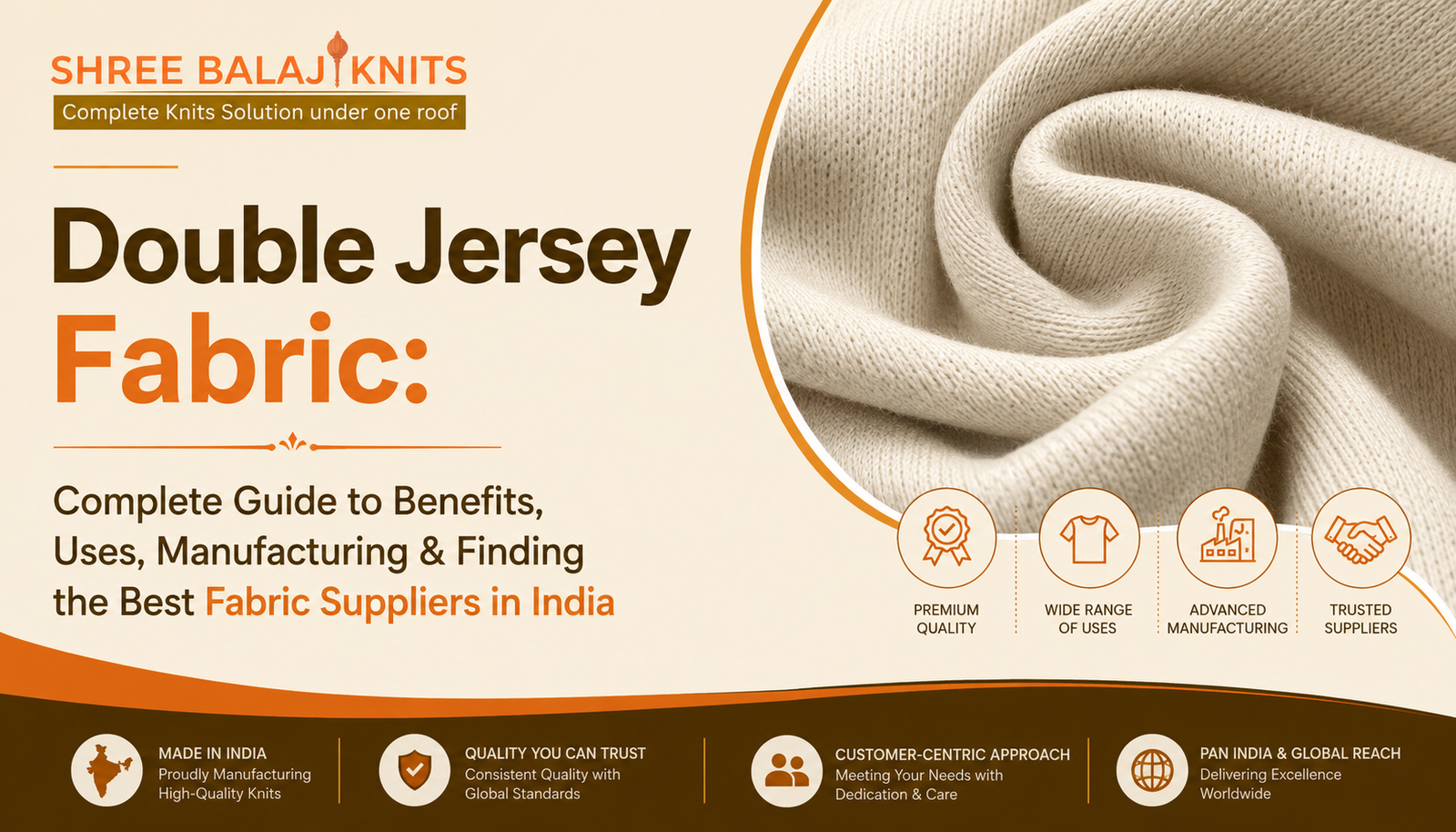
The textile industry continues to evolve with advanced knitting technologies, and double jersey fabric has become one of the most preferred materials for premium apparel and industrial applications. Known for its durability, comfort, excellent stretch recovery, and smooth finish, this fabric offers a perfect balance between performance and appearance.
As global demand for knitted textiles continues to grow, fabric production in India has positioned itself among the world’s leading manufacturing hubs. Indian textile manufacturers are recognized for producing high-quality knitted fabrics while maintaining competitive pricing, sustainable production practices, and large-scale manufacturing capabilities.
Whether you’re a fashion brand, garment manufacturer, exporter, or sourcing professional, understanding double knit fabric helps you choose the right material for long-lasting, high-quality garments.
Double Jersey Fabric
Double jersey fabric is a weft-knitted fabric produced using two sets of needles on a circular knitting machine. Unlike single jersey fabric, it has loops on both sides, making the fabric thicker, stronger, and more dimensionally stable. The dual-layer construction creates a fabric that resists curling, offers excellent durability, and provides a premium finish.
The term double knit fabric is often used interchangeably with double jersey because both describe fabrics produced using double-bed knitting technology. However, several fabric structures such as interlock, rib, ponte, and Milano are different variations within the double-knit category.
Double Knit Fabric is Manufactured
The manufacturing process begins with specialized circular knitting machines equipped with two needle beds. During knitting, yarn forms loops simultaneously on both needle sets, creating an interlocked fabric structure. This construction provides greater stability than single jersey fabrics while maintaining softness and flexibility.
The production process generally includes:
- Yarn selection
- Circular knitting
- Fabric inspection
- Dyeing
- Compacting
- Heat setting
- Quality testing
- Final finishing
Modern manufacturers also perform GSM testing, shrinkage control, color fastness testing, and dimensional stability checks before dispatching the fabric.
Key Characteristics of Double Jersey Fabric
One reason double jersey fabric remains popular across industries is its balanced performance.
- Excellent Durability
The double-layer construction increases strength, making the fabric resistant to tearing and repeated washing.
- Better Shape Retention
Unlike lightweight knitted fabrics, double knit fabric maintains its structure even after frequent use.
- Comfortable Stretch
It offers controlled stretch with excellent recovery, allowing garments to remain comfortable without becoming loose over time.
- Smooth Surface
Both sides of the fabric have a neat appearance, making it ideal for premium garments and printing applications.
- Reduced Curling
Since both sides are knitted together, the edges remain flatter, making cutting and stitching easier.
- Better Warmth
Its thicker construction provides additional insulation while remaining breathable.
Common Fibers Used in Double Jersey Fabric
Manufacturers produce double knit fabric using different yarn compositions depending on the end application.
Popular options include:
- 100% Cotton
- Cotton Polyester Blend
- Cotton Spandex
- Polyester Spandex
- Viscose Blend
- Modal Blend
- Bamboo Blend
Each fiber combination offers different levels of softness, stretch, moisture management, and durability.
Applications of Double Jersey Fabric
Because of its versatility, double jersey fabric is widely used across multiple industries.
Common applications include:
- T-shirts
- Polo shirts
- Hoodies
- Sweatshirts
- Dresses
- Activewear
- Yoga wear
- Children’s clothing
- Jackets
- School uniforms
- Corporate uniforms
- Lounge wear
- Sportswear
- Fashion garments
- Premium knitwear
Its smooth finish also makes it suitable for digital printing, embroidery, and branding.
Double Jersey Fabric vs Single Jersey Fabric
Understanding the difference helps buyers choose the right material.
| Feature | Single Jersey | Double Jersey Fabric |
| Thickness | Lightweight | Medium to Heavy |
| Stretch | Higher | Balanced |
| Durability | Moderate | High |
| Curling | Yes | Minimal |
| Structure | One-sided | Double-sided |
| Shape Retention | Moderate | Excellent |
| Sewing | Slightly difficult | Easier |
Double jersey is generally preferred when durability, premium appearance, and long product life are priorities.
Why Garment Manufacturers Prefer Double Knit Fabric
Leading apparel brands choose double knit fabric because it provides consistent quality during large-scale production.
Major advantages include:
- Premium garment appearance
- Better sewing performance
- Less fabric distortion
- Improved dimensional stability
- Longer product lifespan
- Higher customer satisfaction
- Reduced return rates
These qualities make it ideal for both domestic and export markets.
Fabric Production in India: A Global Manufacturing Hub
Today, fabric production in India plays a vital role in the global textile supply chain. The country has developed an integrated ecosystem covering spinning, knitting, dyeing, finishing, garment manufacturing, and exports.
Indian manufacturers benefit from:
- Modern circular knitting machines
- Skilled textile professionals
- Large cotton production
- Competitive manufacturing costs
- Advanced quality control
- Sustainable processing technologies
- Strong export infrastructure
These strengths enable Indian textile companies to supply knitted fabrics to fashion brands across Europe, North America, the Middle East, and Asia.
Reliable Fabric Suppliers in India
Finding trustworthy fabric suppliers in India requires more than comparing prices.
Consider the following factors before placing an order.
Manufacturing Capacity
Choose suppliers capable of handling both small and bulk production requirements.
Quality Control
Reliable manufacturers conduct GSM testing, shrinkage testing, color fastness testing, and fabric inspection before shipment.
Customization
Look for suppliers offering:
- Custom GSM
- Custom colors
- Different fabric blends
- Printing support
- Finishing options
Delivery Performance
Timely delivery is essential for maintaining garment production schedules.
Certifications
Reputed manufacturers often comply with internationally accepted quality and sustainability standards depending on customer requirements.
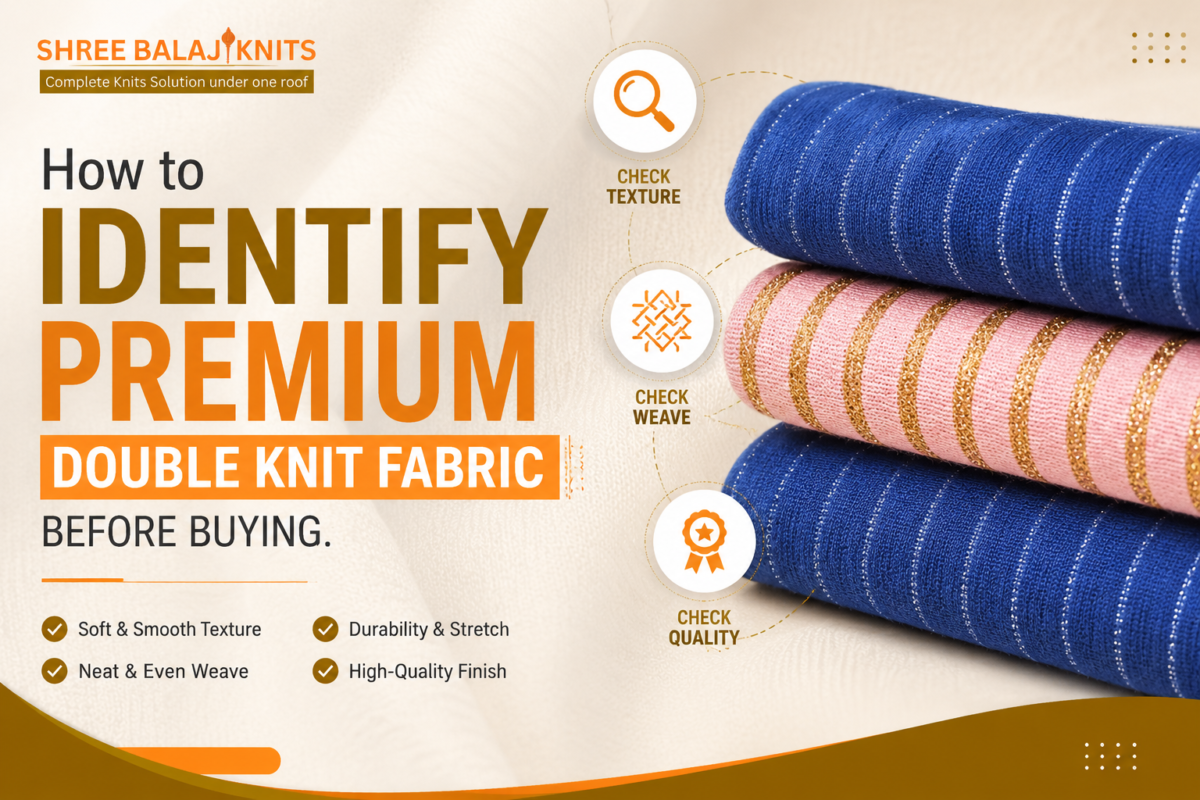
Quality Parameters to Check Before Buying
Professional buyers evaluate several quality indicators before confirming fabric orders.
Important checks include:
- GSM consistency
- Fabric width
- Shrinkage percentage
- Color fastness
- Pilling resistance
- Stitch density
- Stretch recovery
- Surface appearance
- Fabric defects
- Dimensional stability
Testing these parameters helps ensure consistent garment quality.
Sustainability in Modern Textile Manufacturing
The textile industry is increasingly adopting sustainable production methods.
Many fabric suppliers in India now focus on:
- Water-efficient dyeing
- Energy-efficient machinery
- Reduced chemical consumption
- Better wastewater treatment
- Recycled yarn options
- Organic cotton sourcing
Sustainable manufacturing not only reduces environmental impact but also meets the growing expectations of global fashion brands.
Future Demand for Double Knit Fabric
The demand for double knit fabric continues to increase as consumers seek clothing that combines comfort, durability, and premium quality.
Growing trends driving demand include:
- Athleisure fashion
- Sustainable clothing
- Premium casual wear
- Smart textiles
- Export-oriented garment manufacturing
- High-performance knitwear
Manufacturers investing in advanced knitting technology and sustainable production are expected to remain highly competitive in global markets.
Double jersey fabric has become one of the most reliable knitted fabrics for modern apparel manufacturing. Its superior strength, dimensional stability, smooth finish, and excellent comfort make it suitable for a wide variety of garments ranging from casual wear to premium fashion collections.
Also Read This –
Single Knit and Double-Knit Fabric: Which One Should Be Your Choice?
With continuous technological advancements, fabric production in India has earned a strong reputation for delivering high-quality knitted textiles to domestic and international markets. Businesses looking for dependable fabric suppliers in India should prioritize manufacturing expertise, quality assurance, customization capabilities, and consistent delivery performance over price alone.
By choosing the right double knit fabric and partnering with experienced manufacturers, brands can improve garment quality, enhance customer satisfaction, and build long-term success in the competitive textile industry.